
Research
TIPS Lab Research
The TIPS (Treatment Innovation for Psychology Services) Lab, led by Shannon Sauer-Zavala, PhD, seeks to improve psychological care by understanding how personality shapes mental health, as well as how intentional changes in personality can improve emotional well-being, relationships, and goal pursuit. Our research integrates personality science, psychopathology research, and clinical intervention development to identify the core mechanisms that maintain anxiety, depression, borderline personality disorder (BPD), and related conditions.
Rather than viewing mental health disorders as isolated diagnoses, we study the shared personality-based processes that cut across traditional diagnostic categories. By identifying these core mechanisms, we develop and rigorously test evidence-based interventions designed to directly target the processes that matter most.
Across our research program, we use complementary methods, including longitudinal surveys, laboratory experiments, ecological momentary assessment, randomized clinical trials, and treatment component studies. to translate advances in personality science into more effective, personalized, and accessible psychological care.
Dr. Sauer-Zavala's Research Overview
In September 2023, Dr. Sauer-Zavala delivered a keynote address at the Cambridge University Transdiagnostic Conference in Cambridge, UK. This presentation provides an overview of our research program and illustrates how personality science can be used to better understand psychopathology, develop more potent treatments, and personalize psychological care.
Personality as a Mechanism of Mental Health
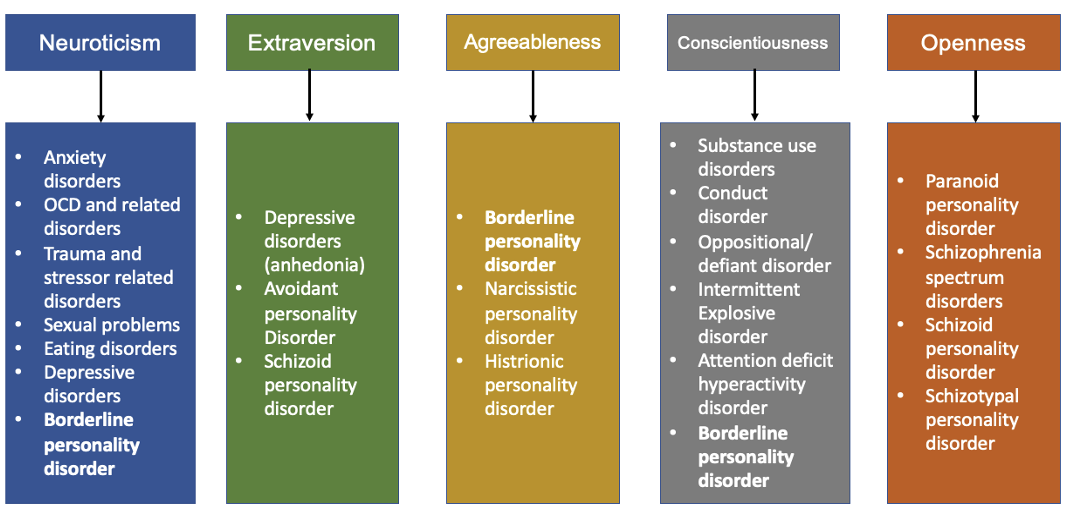 Common mental health conditions are apt to co-occur. Despite high rates of comorbidity, prevailing treatment approaches have traditionally focused on a single diagnosis (e.g., panic disorder, social anxiety). Unfortunately, discrete interventions for each clinical problem do not offer comprehensive care for patients who endorse multiple areas of dysfunction, perhaps leading to suboptimal outcomes. Additionally, the proliferation of disorder-focused manuals places a costly, time-intensive training burden on therapists, likely disincentivizing the provision of empirically-supported interventions in routine practice. In response to these issues, the TIPS program seeks to identify transdiagnostic psychopathological mechanisms that drive the expression of a range of clinical targets and can become the focus of care, rather than individually addressing each symptom/problem. In this approach to understanding psychopathology, heterogeneity in the expression of symptoms/problems can be regarded as surface-level variation in the manifestation of shared core processes. In particular, we are interested in higher-order personality-based mechanisms as a way to succinctly account for various forms of psychopathology and developing treatment modules to target personality domains..
Select Publications
Semcho, S. A., Southward, M. W., Stumpp, N. E., MacLean, D. L., Wolitzky-Taylor, K. B., & Sauer-Zavala, S. (2023). Aversive reactivity: A transdiagnostic functional bridge between neuroticism and avoidant behavioral coping. Journal of Emotion and Psychopathology. PDF
Developing Treatments That Target Personality Processes
Understanding psychological mechanisms is only valuable if that knowledge leads to better care. Our laboratory develops and tests evidence-based treatments that directly target the personality-based processes maintaining emotional disorders. Rather than simply reducing symptoms, these interventions aim to modify the underlying mechanisms that give rise to distress across diagnostic categories.
Dr. Sauer-Zavala is a co-developer of the Unified Protocol for neuroticism, one of the first transdiagnostic cognitive behavioral treatments for emotional disorders. More recently, our lab developed BPD Compass, the first modular treatment designed specifically to target maladaptive personality traits underlying borderline personality disorder. Clinical trials demonstrate that this brief intervention produces substantial improvements in BPD symptoms as well as commonly co-occurring anxiety, depression, posttraumatic stress, and eating pathology.
Our work includes both large randomized clinical trials evaluating treatment efficacy and smaller experimental studies designed to determine whether individual treatment components successfully engage the mechanisms they were intended to change.
Select Publications
Sauer-Zavala, S., Southward, M. W., Hood, C. O., Elhusseini, S., Fruhbauerova, M., Stumpp, N. E., & Semcho, S. A. (2023). Conceptual development and case data for a modular, personality-based treatment for borderline personality disorder. Personality Disorders: Theory, Research, & Treatment. PDF
Sauer-Zavala, S., Southward, M.W., Fruhbauerova, M., Semcho, S.A., Stumpp, N.E., Hood, C., Smith, M., Elhusseini, S., Cravens, L. (in press). BPD Compass: A randomized controlled trial of a short-term, personality-based treatment for borderline personality disorder. Personality Disorders: Theory, Research, & Treatment.
Sauer-Zavala, S., Fournier, J., Jarvi Steele, S., Woods, B., Wang, M., Farchione, T., & Barlow, D. (2021). Does the unified protocol really change neuroticism? Results from a randomized trial. Psychological Medicine, 1-10. PDF
Barlow, D. H., Farchione, T. J., Bullis, J. R., Gallagher, M. W., Latin, H., Sauer-Zavala, S., …. Cassiello-Robbins, C. (2017). The Unified Protocol for Transdiagnostic Treatment of Emotional Disorders compared to diagnosis-specific protocols for anxiety disorders: A randomized clinical trial. JAMA Psychiatry, 74, 875-884. PDF
Personalizing Treatment: Increasing Potency and Efficiency
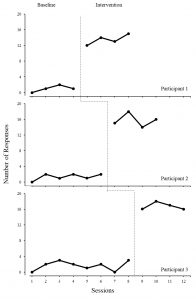
No two people arrive in therapy with exactly the same strengths, challenges, or mechanisms maintaining their distress. One of our long-term goals is to make psychological treatment more precise by identifying which intervention strategies are most effective for which individuals.
Our research examines how personality profiles and core mechanisms can guide treatment selection, sequencing, and termination decisions. Rather than delivering the same intervention to every patient, we aim to develop evidence-based methods for matching treatment components to individual needs, maximizing both treatment efficiency and long-term outcomes.
To ensure our work has real-world impact, we collaborate closely with clinicians and community providers to develop interventions that are not only scientifically rigorous but also feasible to implement in routine clinical practice.
Select Publications
Sauer-Zavala, S., Southward, M. W., Semcho, S. A., Stumpp, N. E., Hood, C. O., Garlock, A., & Urs, A. (2022). A SMART approach to personalized care: Preliminary data on how to select and sequence skills in transdiagnostic CBT. Cognitive Behaviour Therapy. PDF
Sauer-Zavala, S., Southward, M.W., Terrill, D., Semcho, S.A., & Stumpp, N.E. (inpress). Core mechanism engagement as an evidence-based approach to personalized treatment termination. Psychotherapy Research.
Sauer-Zavala, S., Cassiello-Robbins, C., Ametaj, A.A., Wilner, J.W., & Pagan, D.S. (2019). Transdiagnostic Treatment Personalization: Prioritizing Unified Protocol treatment skills to capitalize on strengths or compensate for weaknesses. Behavior Modification. PDF
Our Vision
Our long-term goal is to establish the scientific foundations of intentional personality change as a pathway to improving mental health. By integrating personality science, mechanism-focused intervention, and personalized treatment, we hope to develop psychological care that is more effective, efficient, and accessible for the people who need it most.